-
“Artists create by way of intuition.” —— Shida KUO
For Shida KUO, artistic creation often begins with intuition. At its highest level, creation manifests as an ineffable stroke of divine inspiration, a moment whose origin eludes even the creator’s own explanation. The emergence of form, as if originating from the depths of the body or beyond consciousness, is a perception that precedes language.
-

-
-
Primitive Archetype
Much of Shida KUO's creative inspiration is drawn from the halls of New York’s American Museum of Natural History. To him, the museum offers a proximity to the primitive: fossils, artifacts, and early human tools that embody the interplay of time and the body.
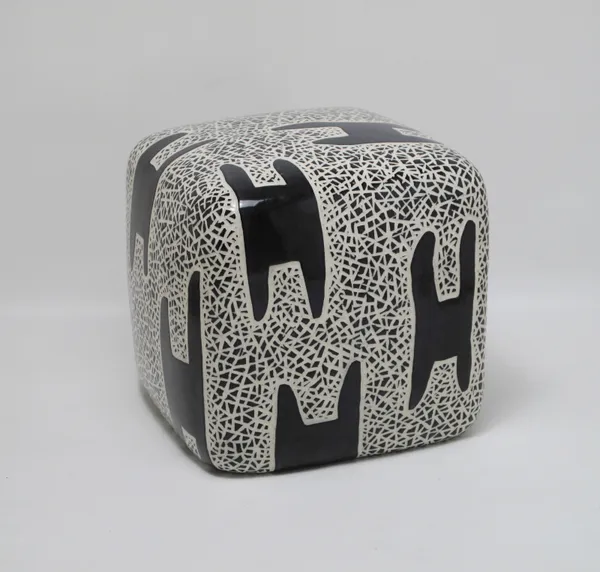
Nature possesses its own aesthetic beauty, but it is not art; art must necessarily be “man-made.” Therefore, KUO is drawn to objects that bear the traces of the human hand, where the tactile qualities and marks of primitive tools inform his artistic vocabulary. As a result, his works frequently display both organic and mechanical qualities, situated at the intersection of natural growth and human manufacture.
-
-
-
Orifices and Slits
A ceramic piece must retain an opening in the firing process. This technical necessity is translated into the formal vocabulary of KUO's works.
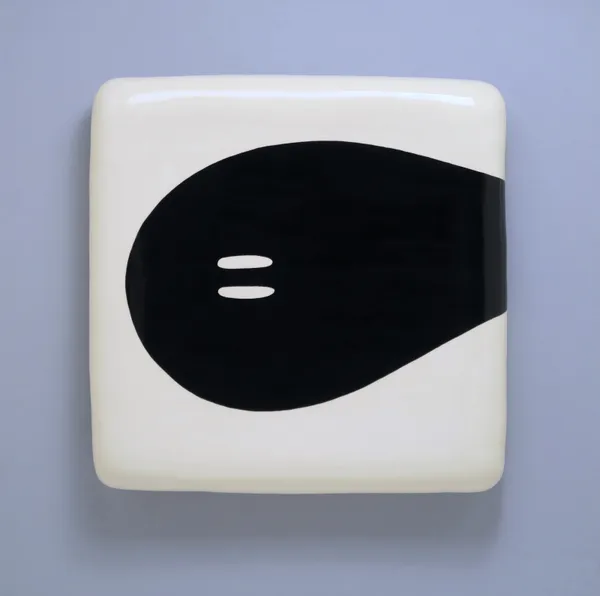
Small apertures or crevices impart both accessibility and enigma, which invite viewers to imagine what might reside within. These openings also hint at an interior space, making the unseen interior an integral part of the viewer’s perception.
-
“When making ceramics, you always need to leave at least a small hole. Through my extension and enhancement, it becomes something present on the surface. Even a small opening suggests that something exists inside, creating a sense of mystery. These surface features also imply a hollow interior and raise questions about the notion of ‘interior space.’”— Shida KUO
-
藝 術 家 訪 談:郭 旭 達 Artist Interview: SHIDA KUO
-
-
-
Interior Space vs. Exterior Space
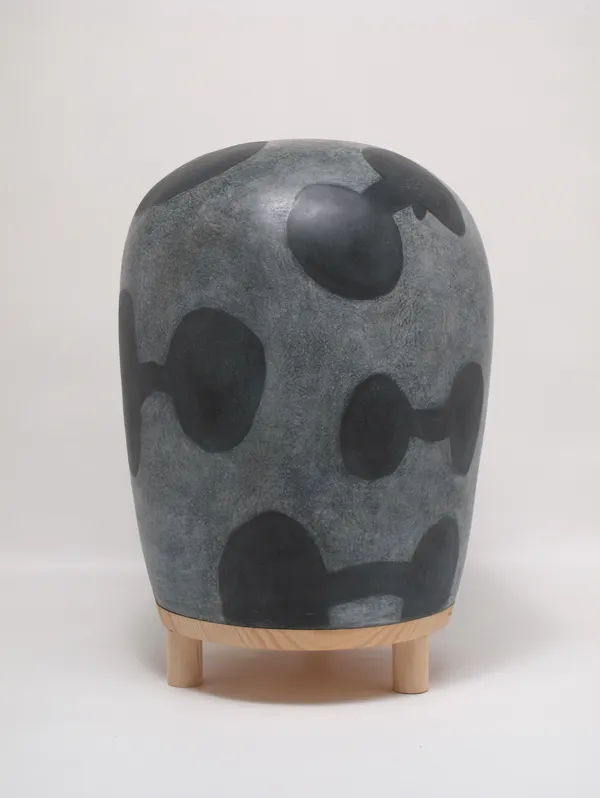
Hollowness is fundamental in ceramics. This structural condition further establishes a relationship between interior and exterior space. KUO is concerned not only with the external form of objects, but also with the possibilities contained within—an invisible domain where things continuously unfold. The creative process is precisely about perceiving this interior space and rendering it into visible form.
-
Clay and Wood—The Most Widely Used Natural Materials in Human History
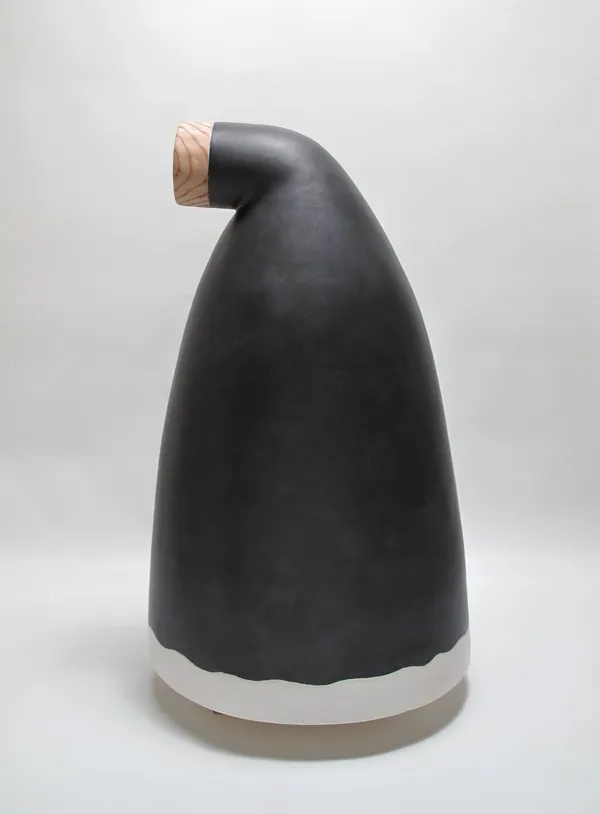
KUO’s choice of clay and pine wood stems from his observation of these as among the most primitive materials used by humankind. These two materials are not only steeped in history but are also intimately connected to bodily experience. Furthermore, he works with low-fired ceramics, which retain porosity and water absorbency. The resulting surface is closer to human skin and imparts a sense of breathability. This is paired with the softness and lightness of pine wood, whose qualities echo and complement those of clay. Building on this texture and creative process, KUO transcends the traditional constraints of clay, long associated with craft and utility, repositioning it as a medium for contemporary sculptural expression.
-
-
-
展 覽 現 場 Installation views
-
Between the Two-Dimensional and Three-Dimensional
Shida KUO was trained in painting in college before developing his practice in ceramic sculpture. Critics have described his past works as “flat sculpture,” highlighting how they have always navigated the space between two and three dimensions. In 2024, upon retiring from New York University, KUO embarked on a renewed exploration of painting’s possibilities. He believes that an artist shouldn't be defined solely by a medium; across painting and sculpture, the underlying principles of creation remain the same. The boundary between the two is constantly being traversed and reconstructed.
-
郭旭達 Shida KUO
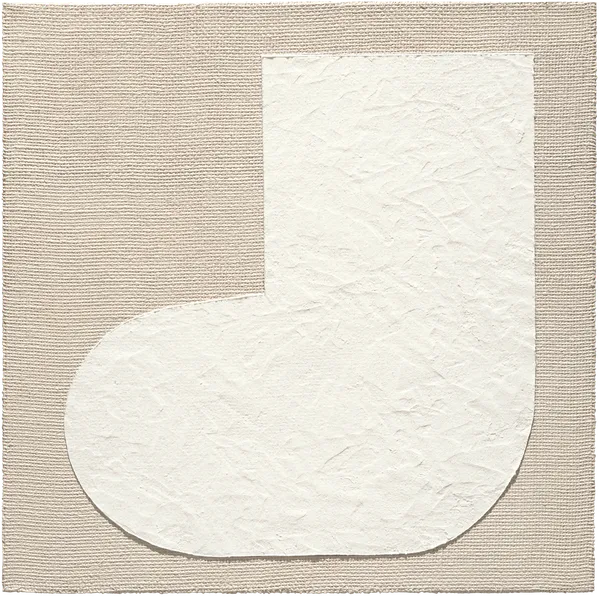
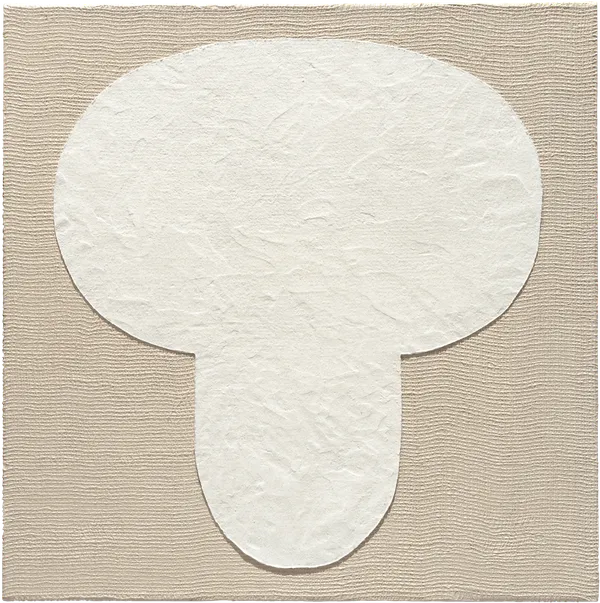
無題 P 13-25 Untitled P 13-25, 2025壓克力顏料、麻布/畫布 Acrylic and burlap on canvas
91.5 x 91.5 cm/ each, set of 2 -
-
-
“I began with painting, and I hope to return to it to take on new challenges. After thirty years working in ceramic sculpture, I now view my two-dimensional work from a fresh perspective, considering what can be carried forward. And that is the direction I will continue to pursue.” — Shida KUO
-
-
-
Though best known for his ceramic sculptures, Shida KUO's training at NTNU's Department of Fine Arts was actually in Western painting. Deeply influenced by the French painter Pierre Bonnard and his mentor LEE Shih-chiao, KUO has long been drawn to the exploration of abstraction, with a particular emphasis on the articulation of pictorial space and materiality. This sensibility carries through into his two- dimensional works. In Untitled P01-25, for instance, the surface is activated through nuanced textural expression rather than relying on flat fields of color. Meanwhile, Untitled P05-25 and Untitled P06-25 incorporate wood alongside acrylic mixed with glass sand, generating layered surfaces within the pictorial plane. Grounded in rigorous training in painting, KUO moves fluidly between three-dimensional and two- dimensional practices. His ceramic sculptures possess a pronounced painterly sensibility, while his paintings and two-dimensional works reveal a sculptural understanding of form and color, ultimately dissolving the conventional boundaries between these two modes of creation.
Marking the artist’s first exhibition in Taiwan in six years, it brings together 33 works, spanning ceramic sculpture and two-dimensional pieces. The ceramic sculptures, developed over eight years from 2016 to 2024, reflect the enduring artistic concerns that have defined KUO’s three-decade career, while also revealing an expanded formal and conceptual vocabulary that speaks to the breadth of his artistic creations.
Shida KUO’s Solo Exhibition
- Date: April 11 to June 6 2026
- Address: ESLITE GALLERY | B1, No. 88, Yanchang Rd., Xinyi Dist., Taipei City 110055, Taiwan (eslite spectrum Songyan)
- Opening Hours: 11am-7pm, Tuesday – Saturday